




















As expectations around fairness, transparency, and consistency continue to evolve across medical education, many institutions are taking a closer look at how learner narratives are developed and supported behind the scenes.
In our webinar, From Assessments to Defensible Medical Student Performance Narratives, we explored the broader institutional processes that contribute to stronger, more defensible learner narratives — from assessment practices and governance to workflow visibility and longitudinal learner review.
Looking Beyond the Final Narrative
Rather than focusing only on the final narrative itself, the session encouraged institutions to think more holistically about the systems, structures, and operational processes that shape learner representation over time.
Throughout the discussion, we touched on several important themes, including:
-
The growing importance of transparency and consistency in learner evaluation
- The role of evidence and longitudinal assessment in supporting learner narratives
- Common operational challenges institutions face when managing academic letter workflows
- How centralized systems and governance practices can support more structured processes
- Emerging conversations around AI, standardization, and narrative integrity
The Next Challenge Is Not Collecting Data, But Using It Well
The session also sparked thoughtful discussion during the live Q&A, where participants shared challenges and questions related to workflow management, reviewer consistency, longitudinal assessment practices, and balancing efficiency with fairness in high-stakes evaluation processes.
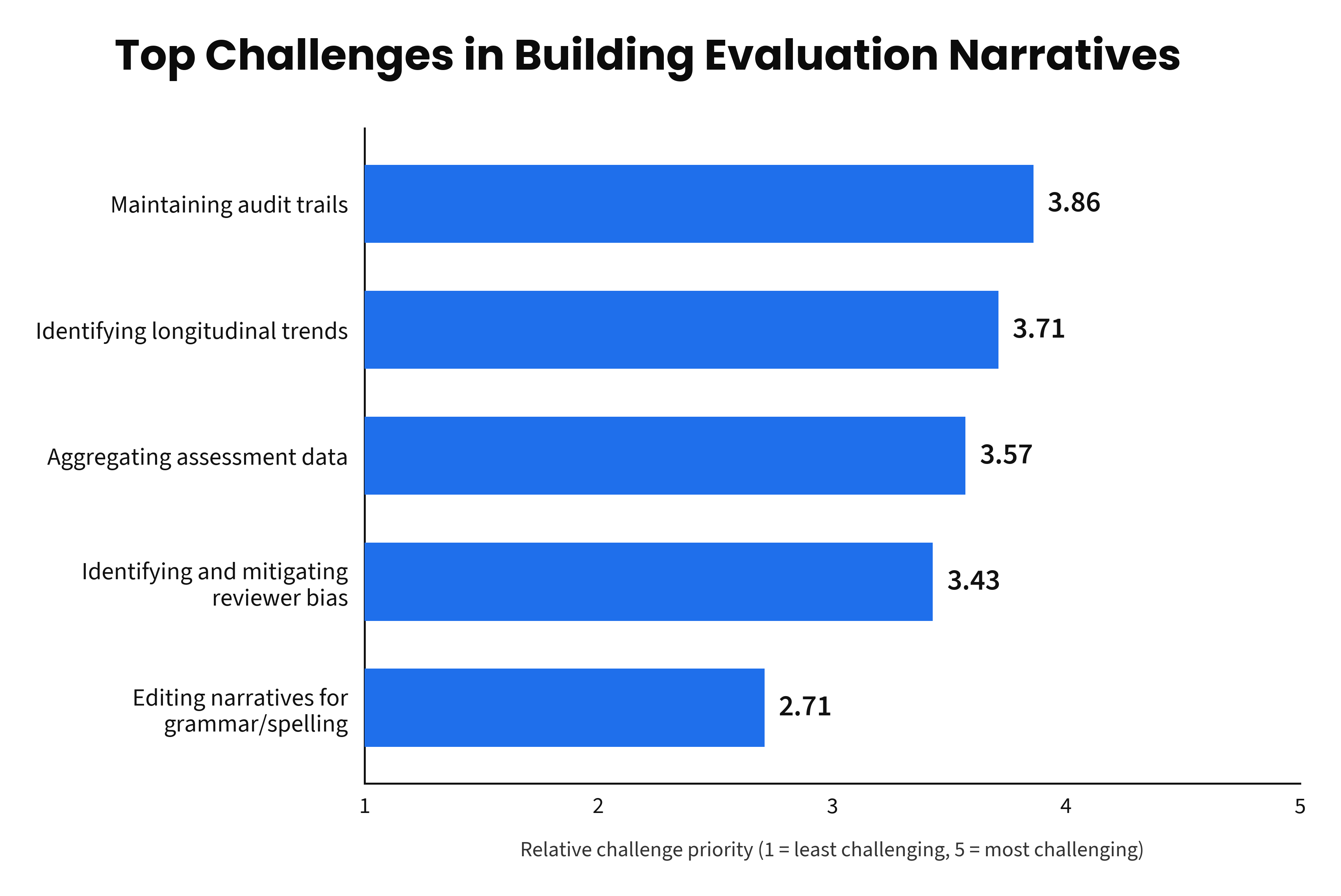
Two interesting observations came from polls run during the event. First, attendees were asked how they would rank a variety of types of challenges related to building evaluation narratives at their institutions (where “5” was the highest / most challenging and “1” was the lowest / least challenging):
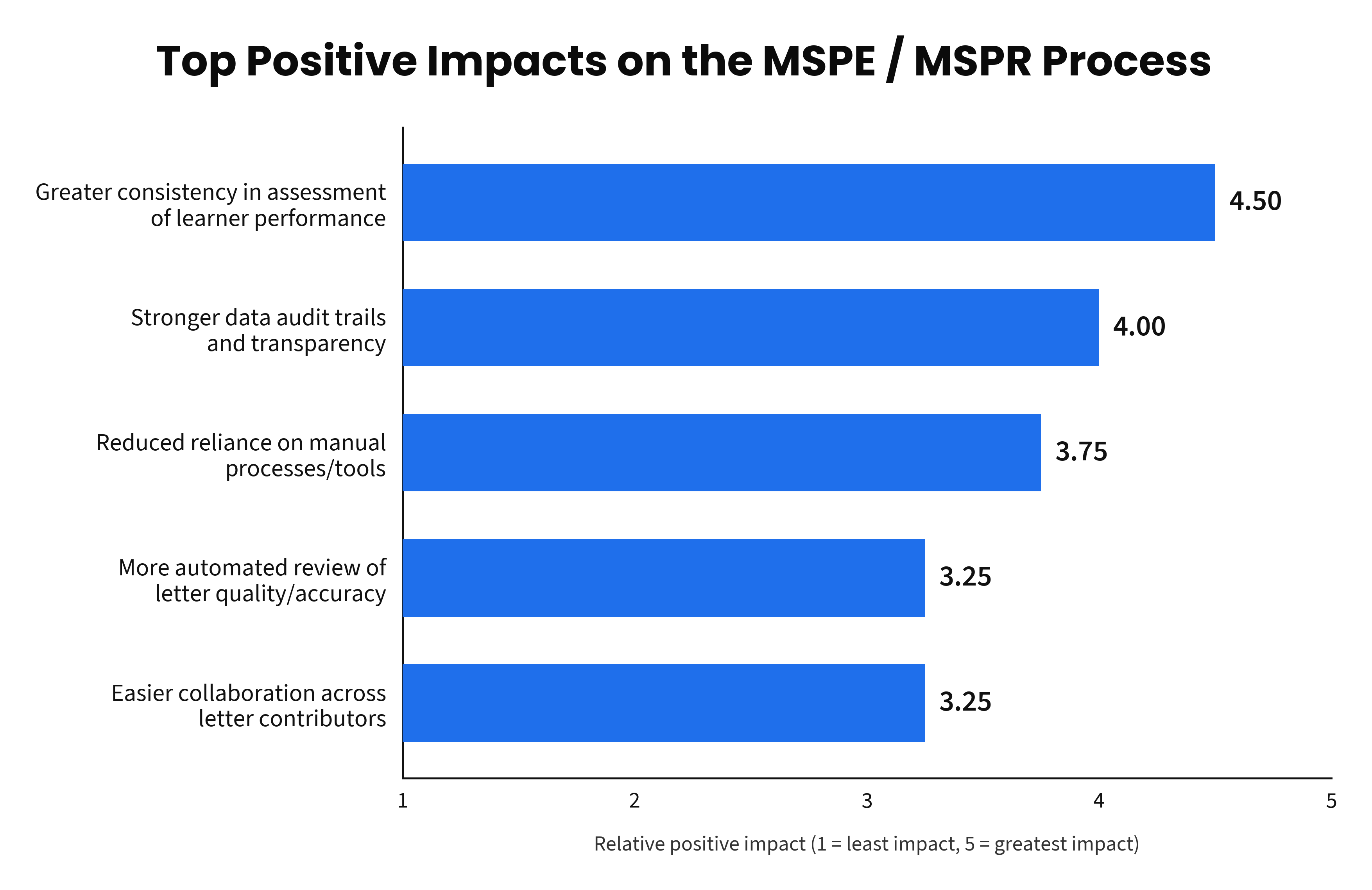
Second, attendees were asked how they would you rank the positive impact / helpfulness of having the following MSPE / MSPR improvements at their institution (“5” was the most impactful / helpful and “1” was the least impactful / helpful):
These results suggest that the central challenge in building defensible evaluation narratives is not simply producing well-written prose, but ensuring the narrative is grounded in consistent, traceable, and longitudinal evidence. Attendees identified maintaining audit trails, identifying learner trends over time, aggregating assessment data, and mitigating reviewer bias as greater challenges than basic grammar or spelling–reinforcing that narrative quality depends on the strength of the underlying process.
Similarly, when asked about potential positive impacts on the MSPE /MSPR process, respondents placed the greatest value on more consistent assessment of learner performance and stronger audit trails/transparency. Taken together, these findings suggest that better systems and workflows should help educators synthesize learner performance data fairly, document how conclusions were reached, and support evaluator judgment with greater structure, visibility, and confidence.
Continue the Conversation
If you would like to explore these ideas further, you may request access to the webinar recording.
We are also continuing the conversation in our member community, Elentra Connect, where Elentra Members are invited to join the discussion and share hear how this this topic resonates with your institution’s experience or your thoughts on:
-
Where do you see the biggest challenges in building learner narratives?
-
How is your institution approaching consistency and transparency in evaluation workflows?
-
What operational improvements would have the greatest impact on your academic letter processes?
If your institution is working to strengthen learner narrative development, assessment governance, and academic letter workflows, Elentra can help. From assessment management and longitudinal learner review to centralized workflow support and academic letter management, we help medical education programs build more connected, transparent, and defensible evaluation processes—contact us today.